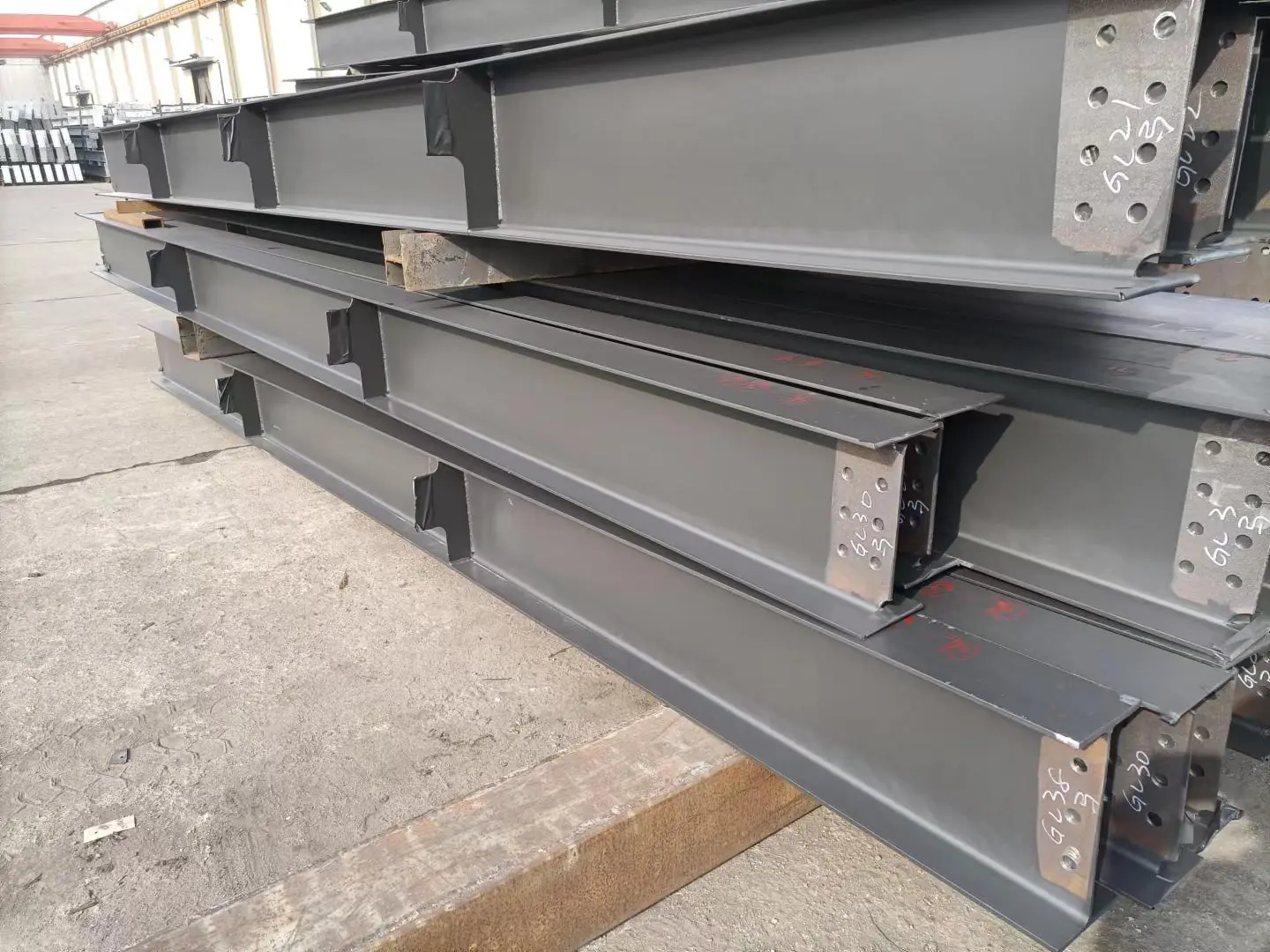
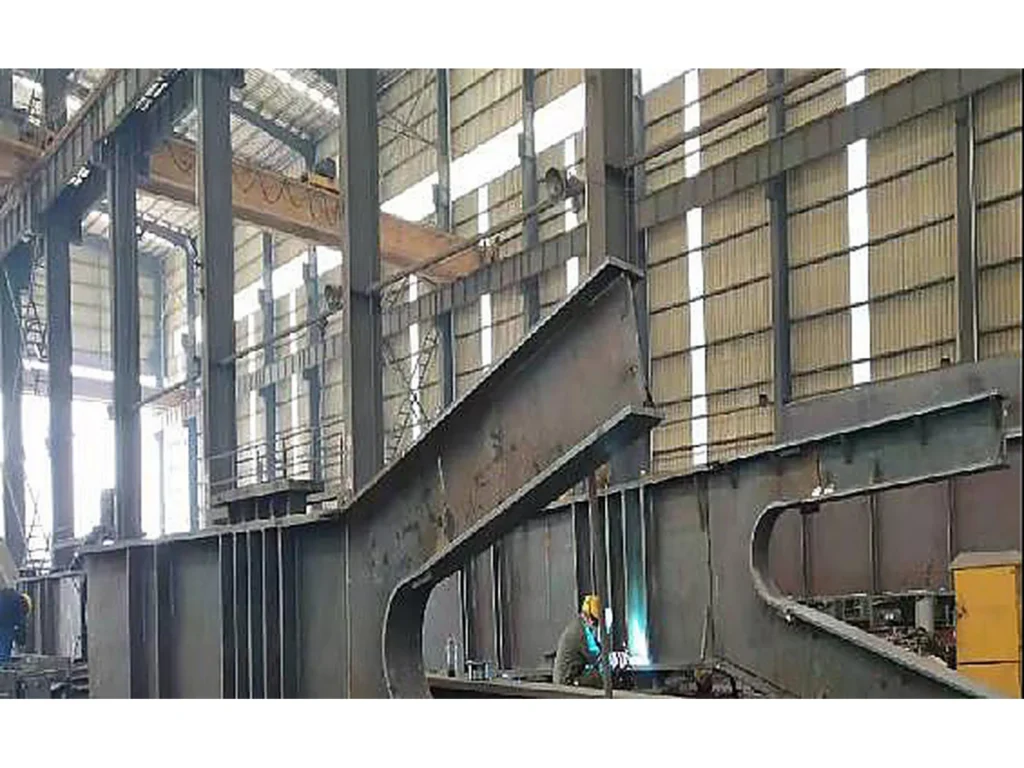
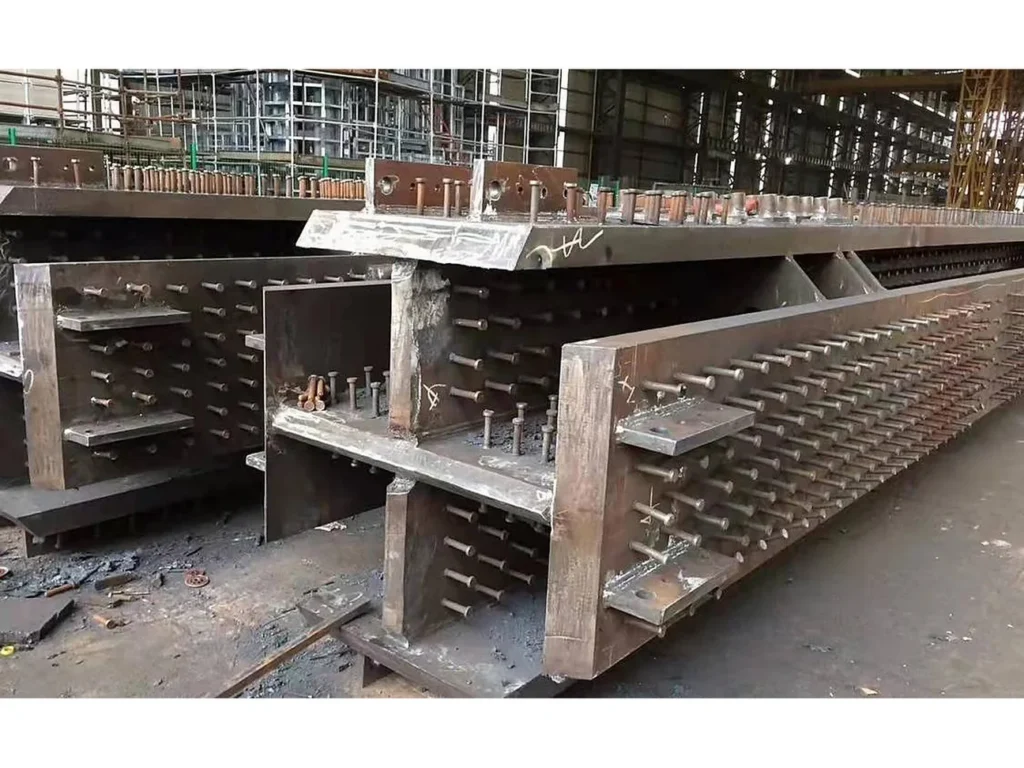
Welded H beams and plate girders with variable depth, pre-camber and full-penetration flange welds for fatigue-loaded members such as crane beams.
A welded girder is used when a rolled beam cannot carry the load, when the depth has to vary along the span, or when a crane beam needs a fatigue detail that a rolled section cannot provide. The design question is usually whether the flange weld should be a fillet or a full-penetration butt weld.
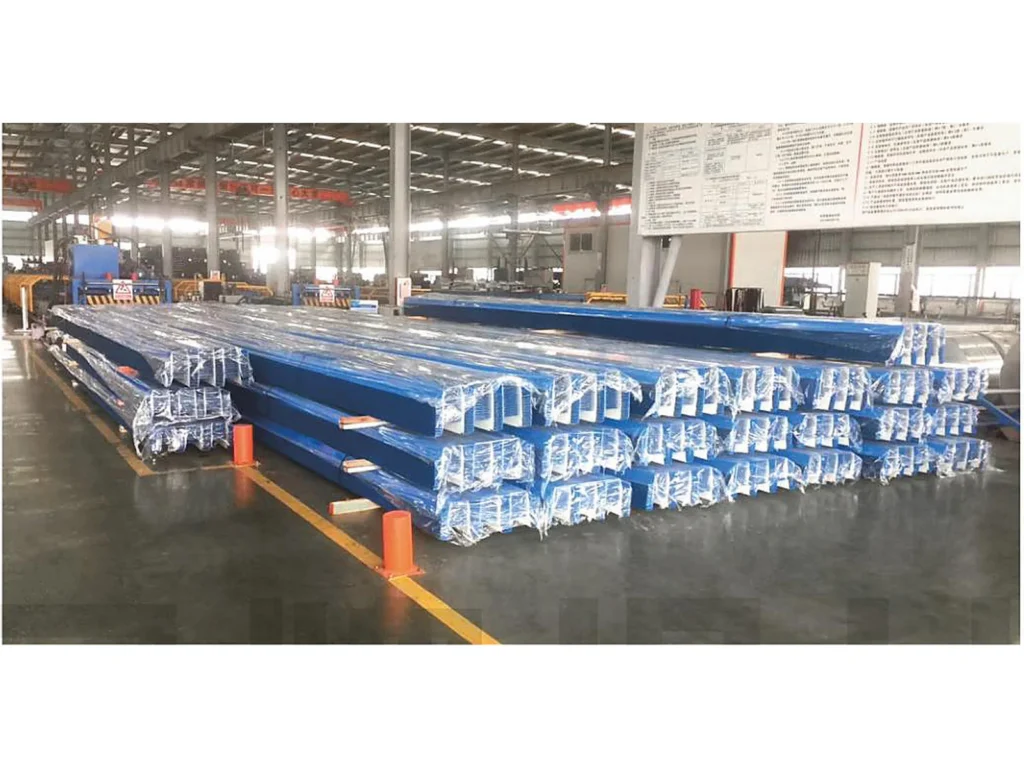
We fabricate welded H beams and plate girders up to 2,500 mm deep and 24 m long, with pre-camber, variable depth and shop-applied coating.
Key Specifications
| Depth |
300 – 2,500 mm |
| Flange width |
150 – 800 mm |
| Plate thickness |
6 – 80 mm |
| Length |
Up to 24 m single piece |
| Flange weld |
Fillet for static members; full penetration for crane beams and fatigue category ≤ 80 |
| Pre-camber |
Up to span/500, built in during assembly |
| Straightness |
L/1000; web flatness to GB 50205 or EN 1090-2 |
Fillet or full penetration
- Static beams in buildings: a continuous fillet weld with the throat thickness calculated for the horizontal shear is sufficient and much cheaper.
- Crane beams and bridge girders: the flange-to-web weld is a fatigue detail. Full-penetration welds with a smooth weld toe, ground flush where the detail requires it, give the fatigue category the design assumes.
- Mixing the two on one girder is a common error: the design assumes one category, the shop welds the other, and the fatigue life is shorter than calculated.
Web stability
Deep thin webs need transverse stiffeners and, for long spans, longitudinal stiffeners. The stiffener spacing is set by the shear buckling check (GB 50017 §6.1 or EN 1993-1-5), and the stiffeners are welded on both sides where the web is slender.
Crane beams in particular
The top flange carries the wheel load directly, so the flange is often a thick plate or a rolled section with the rail fixed by welded clips. The rail clip welds are a fatigue detail and are made in the shop, not on site.
When should a welded girder be used instead of a rolled beam?
When a rolled beam cannot carry the load, when the depth has to vary along the span, or when a crane beam needs a fatigue detail that a rolled section cannot provide.
What sizes of welded H beam and plate girder can you make?
Depth 300 to 2,500 mm, flange width 150 to 800 mm, plate 6 to 80 mm, and length up to 24 m as a single piece.
Fillet weld or full-penetration weld for the flange?
Fillet welds for static members, and full penetration for crane beams and fatigue category 80 or lower.
Can the girder be cambered?
Yes. Pre-camber up to span/500 is built in during fabrication, and shop-applied coating is available.