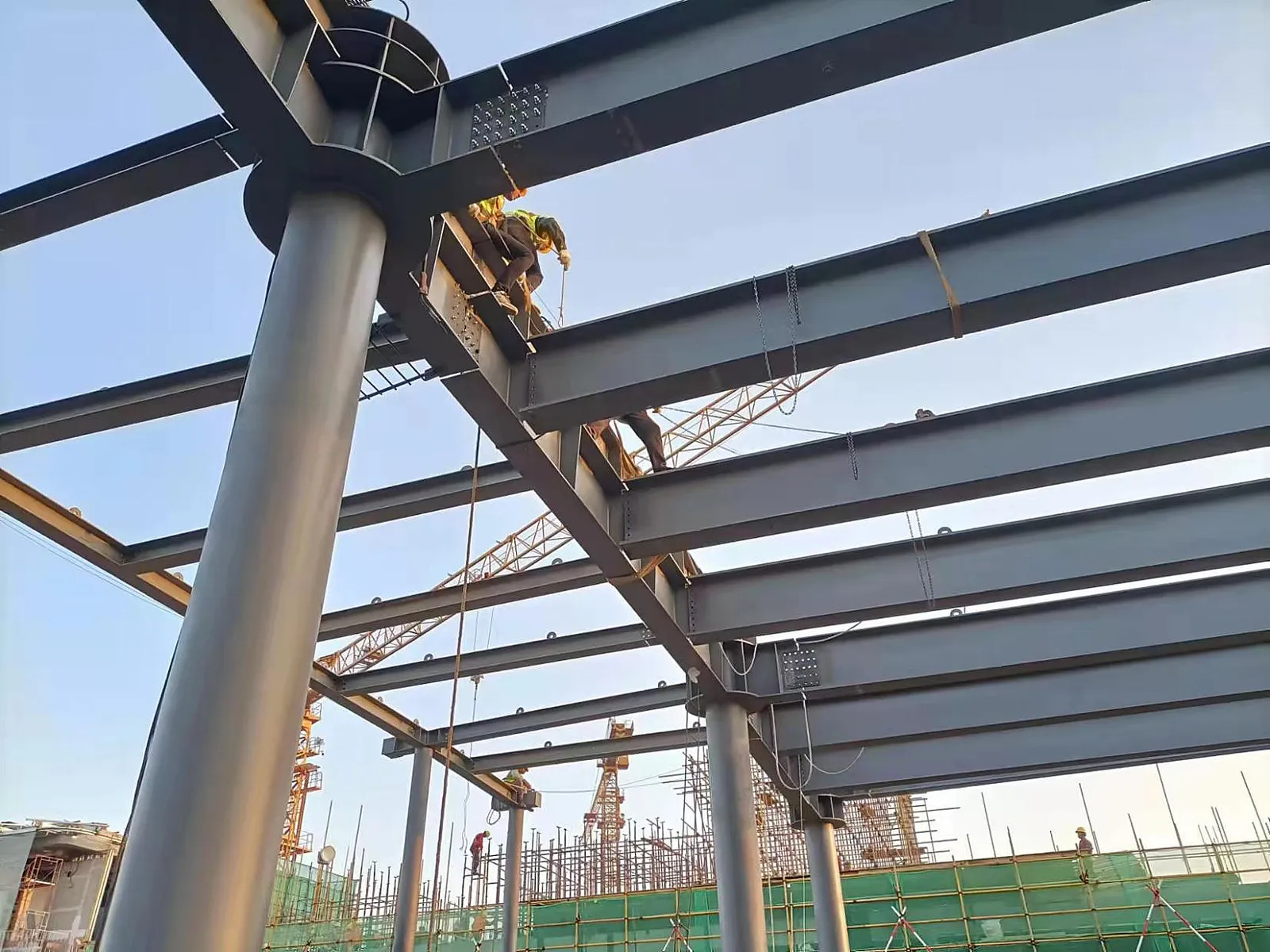
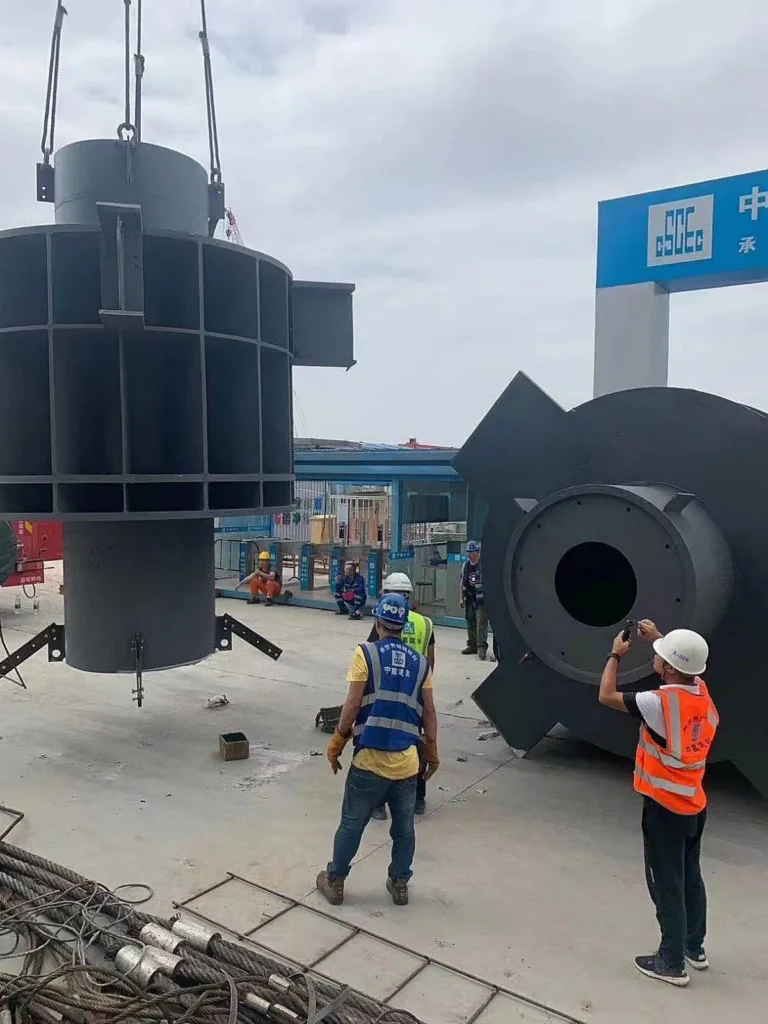
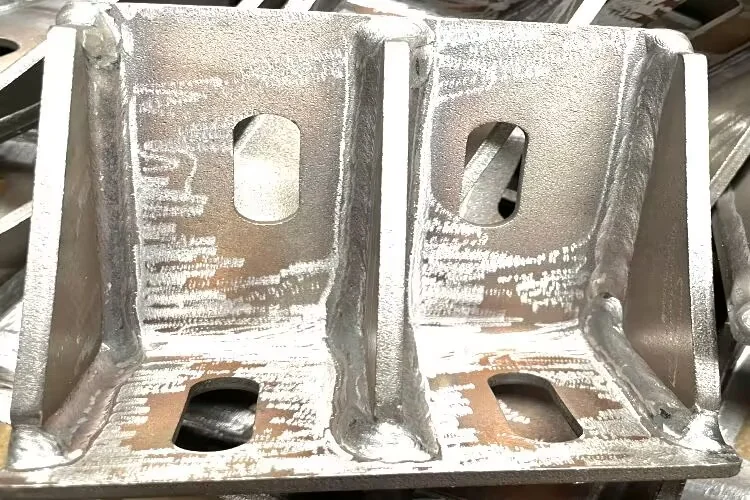
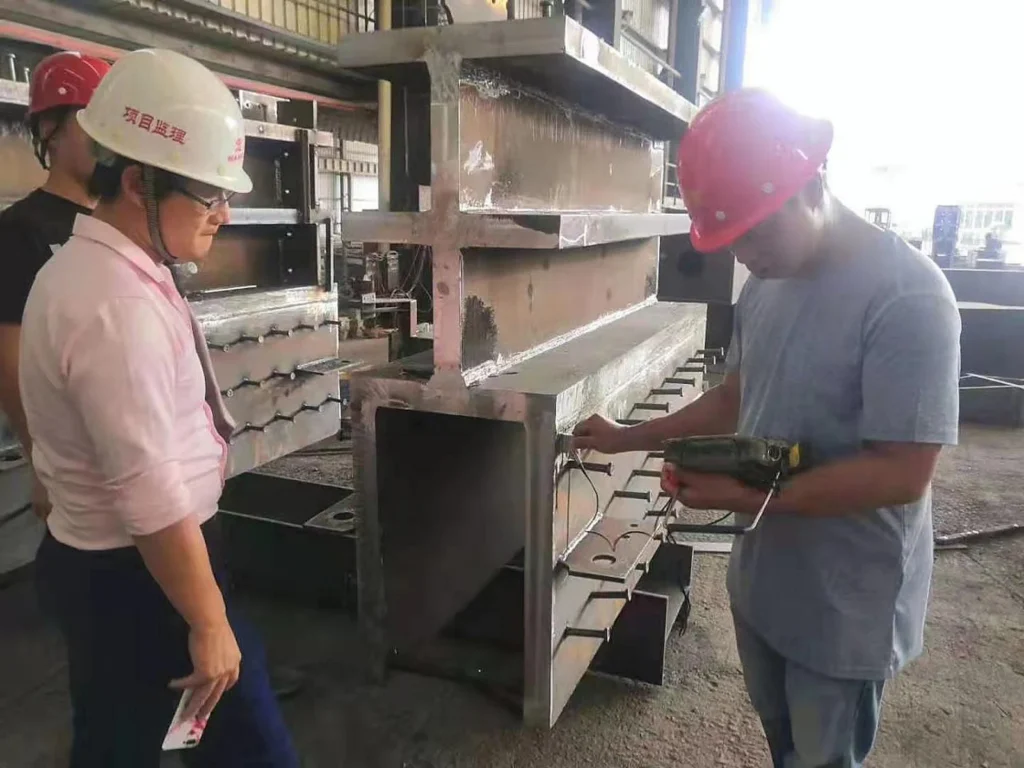
Complex welded and cast steel nodes fabricated from 3D models, with welding access, UT feasibility and dimensional inspection planned before cutting.
A complex node is a small piece of steel that can stop a whole project. If the welder cannot reach the root, if the joint cannot be ultrasonically tested, or if the tolerances accumulate across six intersecting members, the problem is discovered too late to redesign without delay.
We fabricate complex nodes from the 3D model, with the welding access, the inspection method and the assembly sequence reviewed before the first plate is cut.
Key Specifications
| Plate thickness |
10 – 100 mm |
| Material |
Q355B, Q390GJ, Q420GJ; cast steel GS-20Mn5 to GB 7659 |
| Welding |
Full penetration where the design requires; backing where access is limited |
| Inspection |
UT to GB/T 11345 or EN ISO 11666, MT/PT on accessible surfaces |
| Dimensional check |
3D laser scan or total station, compared with the model |
| Trial assembly |
Node trial-fitted with adjoining members in the shop where transport allows |
Design for fabrication, not after it
- Welding access: every full-penetration weld needs room for the torch and for the welder. A detail that looks fine in the model may be impossible in the shop.
- Inspection access: a weld that cannot be reached by the UT probe is effectively unverified. Where access is impossible we change the detail or accept a lower inspection category with the designer.
- Casting versus welding: a cast node removes dozens of welds and can be cheaper for a highly complex geometry, but needs a pattern and a longer lead time.
Tolerance accumulation
When six members meet at one node, every small fabrication tolerance adds up at the far end of the assembly. We set the node as the datum, trial-assemble the connected members, and control the accumulation at the node rather than at each member.
Why can a complex steel node stop a whole project?
If the welder cannot reach the root, if the joint cannot be ultrasonically tested, or if tolerances accumulate across six intersecting members, the problem is found too late to redesign without delay.
How are complex nodes fabricated?
From the 3D model, with the welding access, the inspection method and the assembly sequence reviewed before the first plate is cut.
What materials and plate thickness are available?
Plate thickness is 10 to 100 mm. Materials are Q355B, Q390GJ and Q420GJ, and cast steel GS-20Mn5 to GB 7659.
How are the welds inspected?
Full penetration welds are used where the design requires, with backing where access is limited. Inspection is UT to GB/T 11345 or EN ISO 11666, plus MT/PT on accessible surfaces.