Steel structure manufacturer since 2009 · 8 fabrication bases in China

Primary Steel
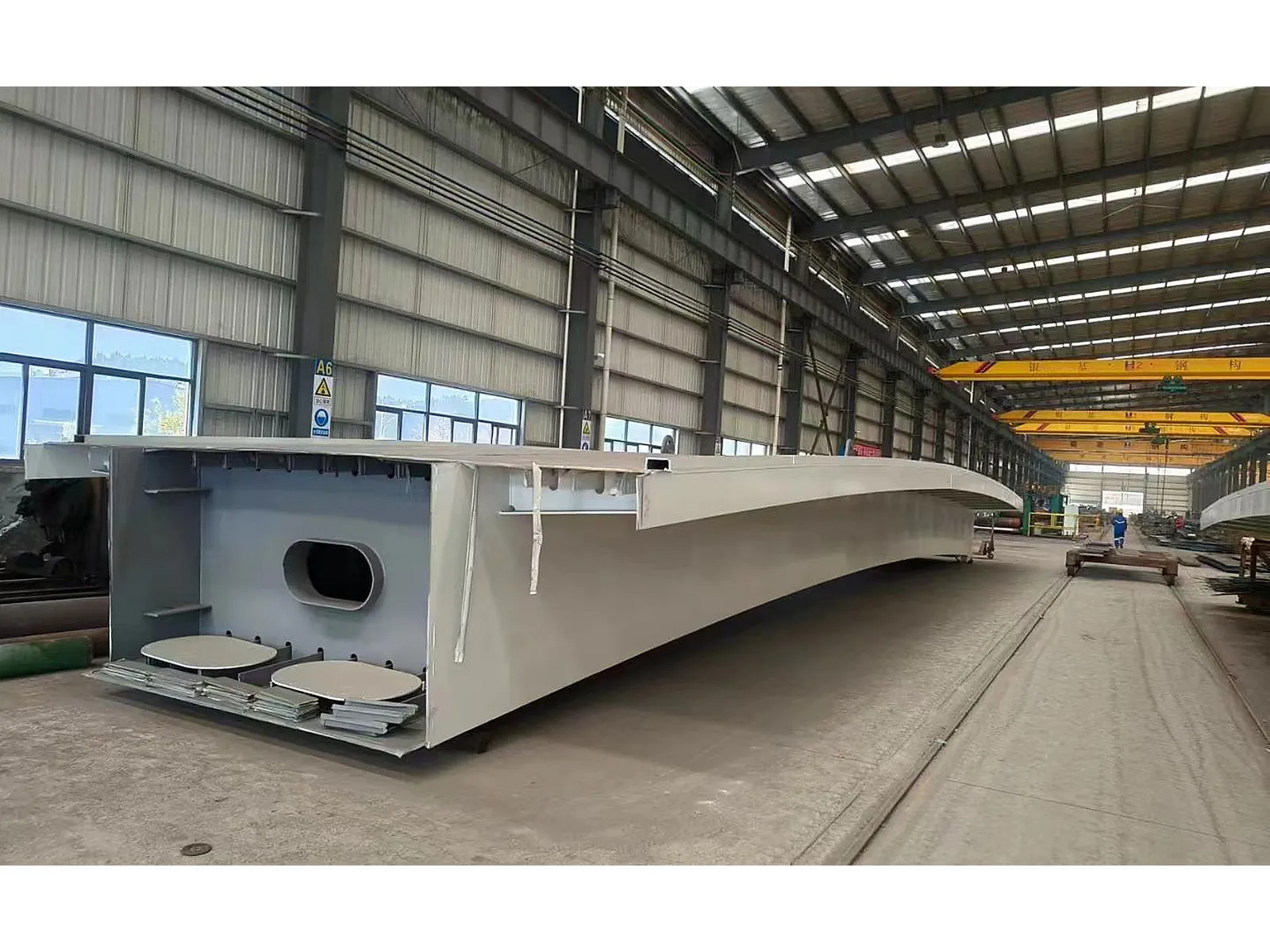
Welded box columns and beams for frames where the node sets the geometry
Four-plate box sections with internal diaphragms, full-penetration welds where the design needs them, and a UT record per seam. Built for high-rise SRC frames, transfer levels and heavy industrial columns.
18,472 t
SRC box and H members, CGN HQ
Q420GJC
Thick-plate grade, Zengcheng tower
100 mm
Maximum plate thickness
100%
UT on CJP seams as standard
Selection
Box or H section: when each one wins
A box column costs more per ton to make. It earns that back where bending comes from two directions, where torsion matters, or where concrete fills or wraps the section.
| Condition | Box | H |
|---|---|---|
| Biaxial bending, corner columns | Better | Weak axis governs |
| Torsion or transfer loads | Better | Poor |
| Concrete-filled (CFT) or SRC | Both | SRC only |
| Exposed architectural column | Clean faces | Visible flanges |
| Simple axial load, one bending axis | Over-designed | Cheaper |
| Fabrication hours per ton | Higher | Lower |
| Beam connections | Through-diaphragm or stiffened | Simple end plates |
Capabilities
Lo que fabricamos
Limits are for a single shipping piece. Longer or heavier members are split with site splices designed for erection.
| Parámetro | Gama | Notas |
|---|---|---|
| Section size | 300 × 300 to 1,500 × 1,500 mm | Rectangular and tapered sections |
| Espesor de placa | 8–100 mm | Through-thickness grade Z15/Z25/Z35 for thick plate loaded through its thickness (GB/T 5313, EN 10164) |
| Piece length | Up to 18 m | 11.8 m fits a 40HQ; longer on flat rack or break-bulk |
| Piece weight | Up to 40 t | Set by workshop cranes and site crane capacity |
| Grados de acero | Q235B, Q355B/C/D, Q390, Q420GJC, Q460; ASTM A572 Gr50, A992; EN S355JR/J2 | Mill certificates to EN 10204 3.1 |
| Diafragmas internos | Fillet-welded inside, or electroslag (ESW) through the skin plate | ESW where the box is too small to weld inside |
| Archivos adjuntos | Shear studs, rebar holes and couplers, beam stubs, corbels | Positioned from the combined steel and rebar model |
| End preparation | Milled ends for contact-bearing splices | Contact checked per piece |
Welding and NDT
How a box column is built, and where it is checked
The order of welding decides the final straightness more than any correction afterwards. Each step is a hold point in the ITP.
01
Plate cutting
CNC flame or plasma cut, bevels for CJP welds. Heat numbers transferred to each piece. Thick plate UT-scanned for laminations (GB/T 2970, EN 10160).
02
U-section fit-up
Three plates on a jig, diaphragms positioned and checked against the model.
03
Soldadura de diafragma
Fillet welds inside, or ESW through the closing plate where access is too tight.
04
Closing and corner welds
Fourth plate closed, corners welded by SAW in a balanced sequence to control twist. Preheat by thickness and carbon equivalent.
05
UT and MT
CJP seams ultrasonically tested, fillets MT tested, to the acceptance class in your specification.
06
Straightening and milling
Heat or press correction, end milling, dimensional report per piece.
WPS and PQR. Qualified procedures for each joint type, plate range and position, issued with the ITP.
Acceptance criteria. GB 50661, AWS D1.1 or ISO 5817 level B/C, whichever your specification names.
Third-party NDT. Your inspector can witness or repeat UT on any seam before coating. See weld testing.
Tolerances
Box section limits under EN 1090-2
Twist is the usual failure. A box that is straight but twisted will not line up with beam stubs on site. Balanced corner welding and diaphragm placement prevent it. Values below are the functional tolerances of EN 1090-2 Annex B.
| Ítem | Class 1 | Class 2 |
|---|---|---|
| Section width or depth b < 900 mm | ±3 mm | ±2 mm |
| Section width or depth 900 ≤ b < 1,800 mm | ±b/300 | ±b/450 |
| Section width or depth b ≥ 1,800 mm | ±6 mm | ±4 mm |
| Twist over length L | L/700, not less than 4 mm and not more than 10 mm | L/1000, not less than 3 mm and not more than 8 mm |
| Length, general | ±(L/5000 + 2) mm | ±(L/10000 + 2) mm |
| Length, ends for full contact bearing | ±1 mm | ±1 mm |
| Rectitud | L/1000 | L/1000 |
| Gap at a contact-bearing surface | 0.5 mm | 0.25 mm |
Source: EN 1090-2 Annex B (Tables B.4 and B.6, checked against the 2017 final draft). Projects to Chinese codes use GB 50205-2020. Your specification names the class and edition; class 2 is priced as such.
SRC and concrete-filled columns
Steel and concrete in the same column
Most SRC problems are clashes, not strength. Rebar, studs and diaphragms compete for the same space, and the clash is cheapest to fix in the model.
- Rebar holes and couplers positioned from a combined steel and rebar model
- Shear stud layout checked against stirrup spacing
- Grout and vent holes in diaphragms for concrete-filled boxes
- Erection splices set above slab level for pour access
- Fire protection agreed: concrete cover or intumescent on exposed steel
Cost drivers
What makes one box column cost more than another
Two columns of the same weight can differ widely in price. These are the reasons, roughly in order of impact.
01
Volumen de soldadura
CJP corner welds on thick plate take many passes. Partial-penetration corners, where the design allows, cut hours sharply.
02
Diaphragms
Each diaphragm is a fit-up, a weld and a test. ESW is needed for small sections and costs more per diaphragm.
03
NDT scope
100% UT on every seam against a sampling rate changes inspection time and repair risk.
04
Archivos adjuntos
Studs, rebar holes, couplers and beam stubs each add positioning and welding time.
05
Plate grade
Z-grade plate and high-strength grades such as Q420GJC cost more per ton than Q355B.
06
Splices and transport
Where the splice goes is a cost decision as well as a structural one.
Project evidence
CGN Engineering Headquarters, Shenzhen
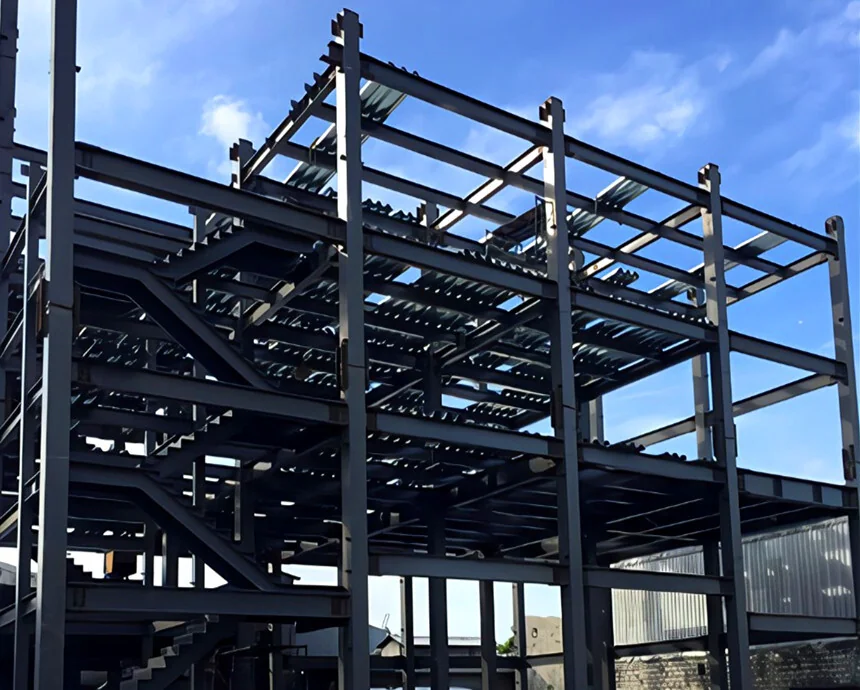
Three towers and a podium with box SRC columns and H-section SRC beams in the tower perimeter frames, and concrete-filled tube columns in the podium.
18,472 t
Total project steel
328,900 m²
Área del piso
3 towers
Plus podium
What is the thickest plate you can weld into a box?
Up to 100 mm. Where thick plate is loaded through its thickness by large welds, we order Z-grade plate and preheat per the WPS to avoid lamellar tearing.
How do you weld diaphragms inside a closed box?
Larger boxes are welded inside before closing. Where a welder cannot reach, diaphragms are welded from outside by electroslag welding through the closing plate.
Are all corner welds full penetration?
Only where the design requires it, typically at beam-connection zones and splices. Between those, partial-penetration welds are common and cheaper. Your drawings decide.
Which tolerance standard do you work to?
The one your specification names: EN 1090-2 class 1 or 2, GB 50205-2020, or AWS D1.1 with AISC 303. Without a specification we apply EN 1090-2 class 1.
Which NDT methods and rates do you use?
UT on CJP welds and MT on fillets, at the rates in your specification. Without one we apply 100% UT on CJP seams.
Can you fabricate tapered or inclined box columns?
Yes, on adjustable jigs, checked by total station before release.
Do you trial-assemble column splices?
On request or where the specification requires it. Milled bearing splices are checked for contact on the workshop floor.
What lead time should we plan?
After shop drawing approval, typically 3–5 weeks for the first 500 t, then a steady output agreed in the schedule.
For an accurate box column quote
Send these and we can price per piece
Missing items are fine. We list them as RFIs and quote on stated assumptions.
- Column schedule: sections, plate thicknesses, lengths
- Connection and splice details
- Steel grade and Z-direction requirement
- Weld, NDT and tolerance specification
- Coating or fire protection spec, delivery port