/
Steel truss types and how to choose one
Guides

Steel truss types and how to choose one

Pratt, Warren, Howe, pipe, triangular and space frame trusses compared by span, depth and use.
GGSteel Engineering · Updated November 2026

On this page

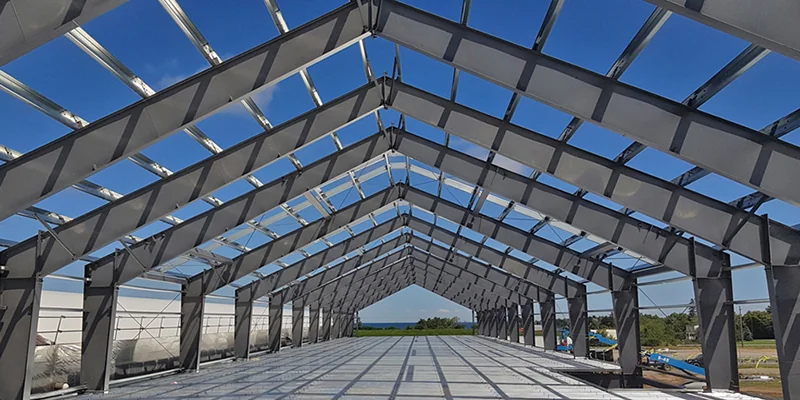
Light steel roof trusses under erection

A truss turns bending into tension and compression in straight members. The pattern of those members decides efficiency, look and fabrication cost.

Common types

JenisPatternStrengthsBentang tipikal
PrattVerticals in compression, diagonals in tensionEfficient under gravity load20–60 m
WarrenDiagonals only, alternatingFewer members, simple20–60 m
HoweDiagonals in compressionSuits timber; less common in steel—
Pipe trussTubular chords and bracesClean look, good in torsion30–80 m
Triangular 3-chordPipe, triangular sectionLaterally stable40–100 m
Space frame3D grid of tubes and nodesVery long spans, two-way40–120 m

Span ranges are typical.

Depth

A span-to-depth ratio of 10 to 15 is typical for roof trusses. Deeper trusses use less steel but eat clear height and are harder to ship.

Transport first: decide splice positions with the shipping method, not after.

Have a project in mind?

Send drawings or a brief. An engineer replies within 1 working day.

Terus membaca

Related articles