Steel structure manufacturer since 2009 · 8 fabrication bases in China

Products
Product Category
Keep In Touch With Us
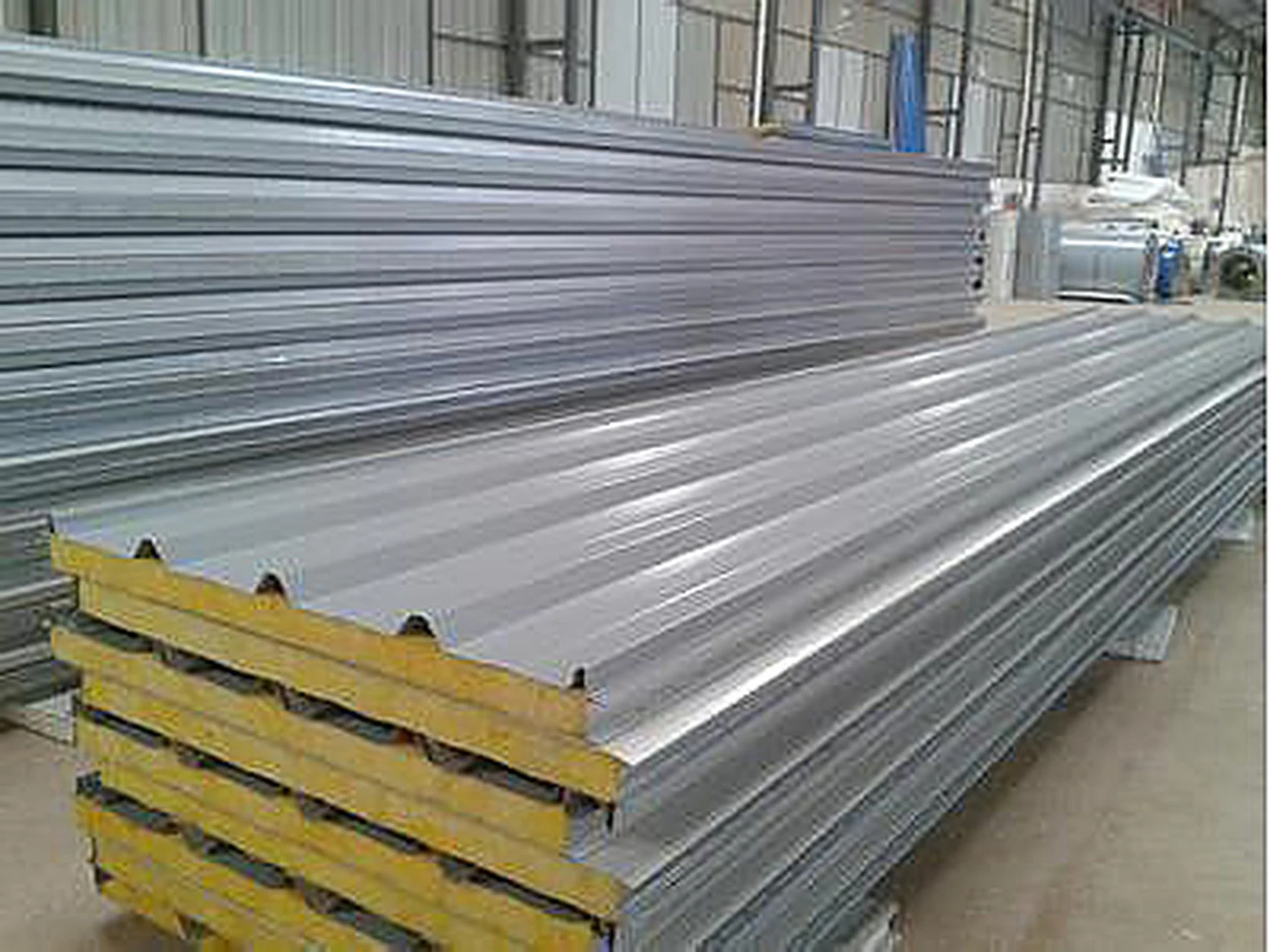
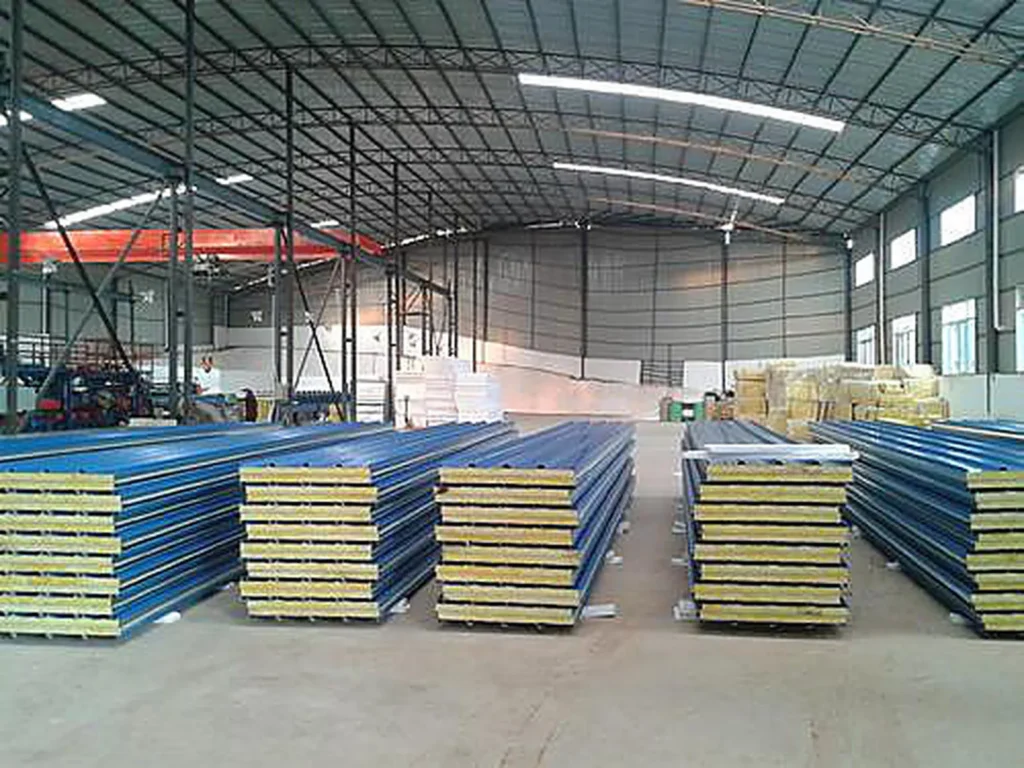
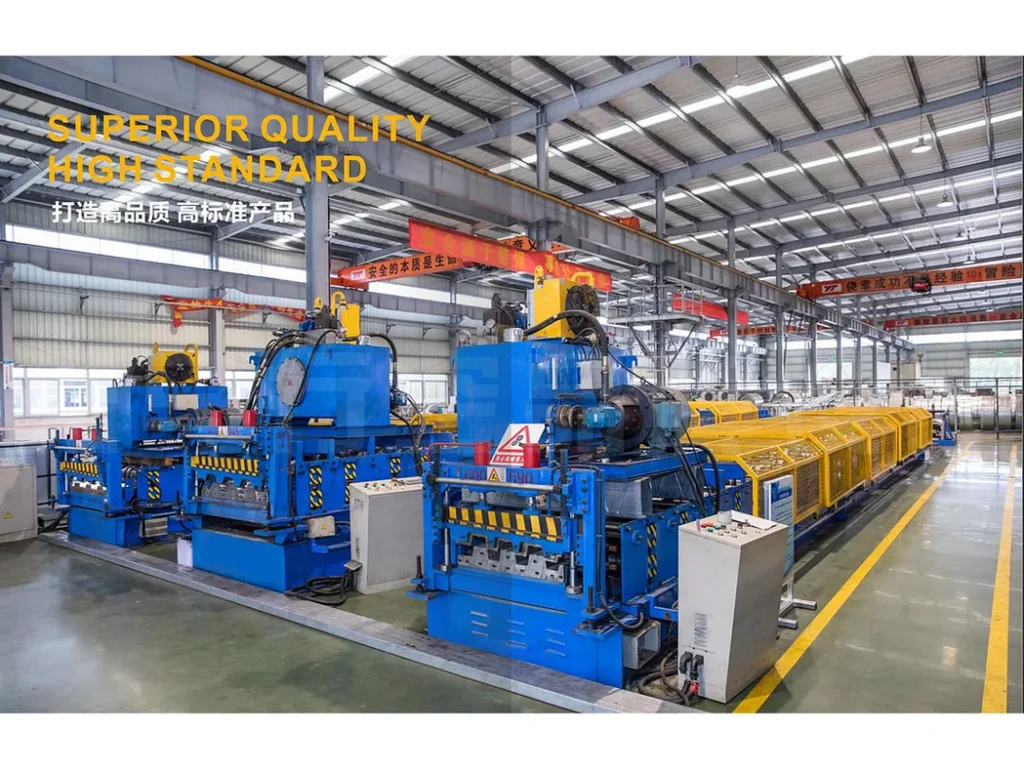
Sandwich Panel & Metal Roof Cladding
Insulated sandwich panels and metal roofing for industrial, cold-store and commercial buildings. We help you choose the core, coating and profile for your climate, fire rules and budget.
Insulated sandwich panels with PUR, PIR or rock wool core and standing seam or trapezoidal metal roofing, selected for fire class, U-value and coastal corrosion.
The cladding decides whether a steel building is comfortable, waterproof and insurable. Three properties drive the choice: the fire class of the core, the thermal performance, and the corrosion resistance of the steel faces.
We supply sandwich panels with PUR, PIR and rock wool cores, and standing seam or trapezoidal metal roofing for long roofs where thermal movement makes through-fixed sheets leak.
Key Specifications
| Core types | PUR, PIR, rock wool |
| Fire class (EN 13501-1) | PUR: D to B-s3,d0; PIR: C to B-s1,d0; rock wool: A2-s1,d0, fire resistance up to EI 240 |
| Thermal conductivity | PUR 0.023 W/m·K, PIR 0.018 W/m·K, rock wool 0.039 W/m·K |
| Panel thickness | 50, 75, 100, 150, 200 mm |
| Steel faces | 0.4 – 0.8 mm prepainted, AZ150 for coastal, Z275 inland |
| Roof profile | Standing seam 65/430 or 75/470 for long roofs; trapezoidal for shorter spans |
Choosing the core
- Rock wool: non-combustible A2-s1,d0 core, needed where the insurer or the code requires a non-combustible envelope, and the only core that gives high fire resistance (up to EI 240 in tested systems).
- PIR: better thermal performance than PUR and a higher fire class (C to B-s1,d0), the usual choice for cold stores and food factories.
- PUR: lowest cost, fire class D to B-s3,d0. Acceptable for many warehouses, but check the insurer requirement before ordering.
Condensation and the vapour barrier
In a cold climate the warm moist air meets the cold steel and condenses. The vapour barrier goes on the warm side, is continuous, and is taped at every joint; the panel joint itself is not a vapour barrier. In a cold store the barrier is on the outside of the insulation, in a heated building on the inside.
Long roofs and thermal movement
A 100 m metal roof expands about 100 mm over a 60 °C temperature range. Through-fixed trapezoidal sheets cannot accommodate that and the screw holes elongate; a standing seam roof with concealed clips and a sliding detail at the eaves does.
| Span | Panel length to project |
| Eave Height | Thickness 50 – 200 mm |
| Structure | other |
| Main Material | PUR / PIR / rock wool core, 0.4 – 0.8 mm prepainted steel faces, AZ150 / Z275 |
| Application | Roof and wall cladding, cold store, clean room, industrial envelope |
What core types are available for sandwich panels?
PUR, PIR and rock wool cores. Panel thickness is 50, 75, 100, 150 or 200 mm.
What fire classes do the cores reach?
Under EN 13501-1: PUR from D to B-s3,d0; PIR from C to B-s1,d0; rock wool A2-s1,d0, with fire resistance up to EI 240.
How do the cores compare on thermal conductivity?
PUR 0.023 W/m·K, PIR 0.018 W/m·K and rock wool 0.039 W/m·K.
When should I choose standing seam or trapezoidal roofing?
For long roofs where thermal movement makes through-fixed sheets leak. Three properties drive the choice: the fire class of the core, the thermal performance, and the corrosion resistance of the steel faces.