





ESW internal diaphragmsQ355GJ · Q420GJC thick plate100% UT on CJP welds
Custom Welded Box Columns, Pipe Columns & Heavy Box Girders
Heavy box columns, box girders and rolled tube columns for high-rise, transfer and seismic frames. Internal diaphragms welded by electroslag, every full-penetration weld ultrasonically tested, pieces up to 24 m and 60 t.
1,800 × 1,800 mmMax. box section
12–100 mmPlate thickness
Φ400–3,000 mmTube columns
24 m / 60 tMax. single piece
01Engineering definition
Closed sections for heavy axial load, biaxial bending and torsion
A welded box column is four plates welded into a closed section. Compared with an H-column of the same weight, it has equal stiffness about both axes, high torsional rigidity and no weak axis to brace. That makes it the default column for high-rise cores, moment frames in seismic zones and exposed architectural columns.
The difficult part is inside. Beam-level diaphragms must be welded to all four skin plates after the box is closed. We weld them by electroslag from outside the box, then test every joint by UT. For concrete-filled columns we add filling holes, vent holes and shear studs to the drawings.
Columns are cut to transport length from the start. Splice heights, erection lugs and temporary connections are set in the Tekla model and agreed with your erector before plate is ordered.
- Box columns, box beams, tube and tapered columns
- Concrete-filled (CFT/CFST) details included
- Splice positions designed for 40HQ or break-bulk
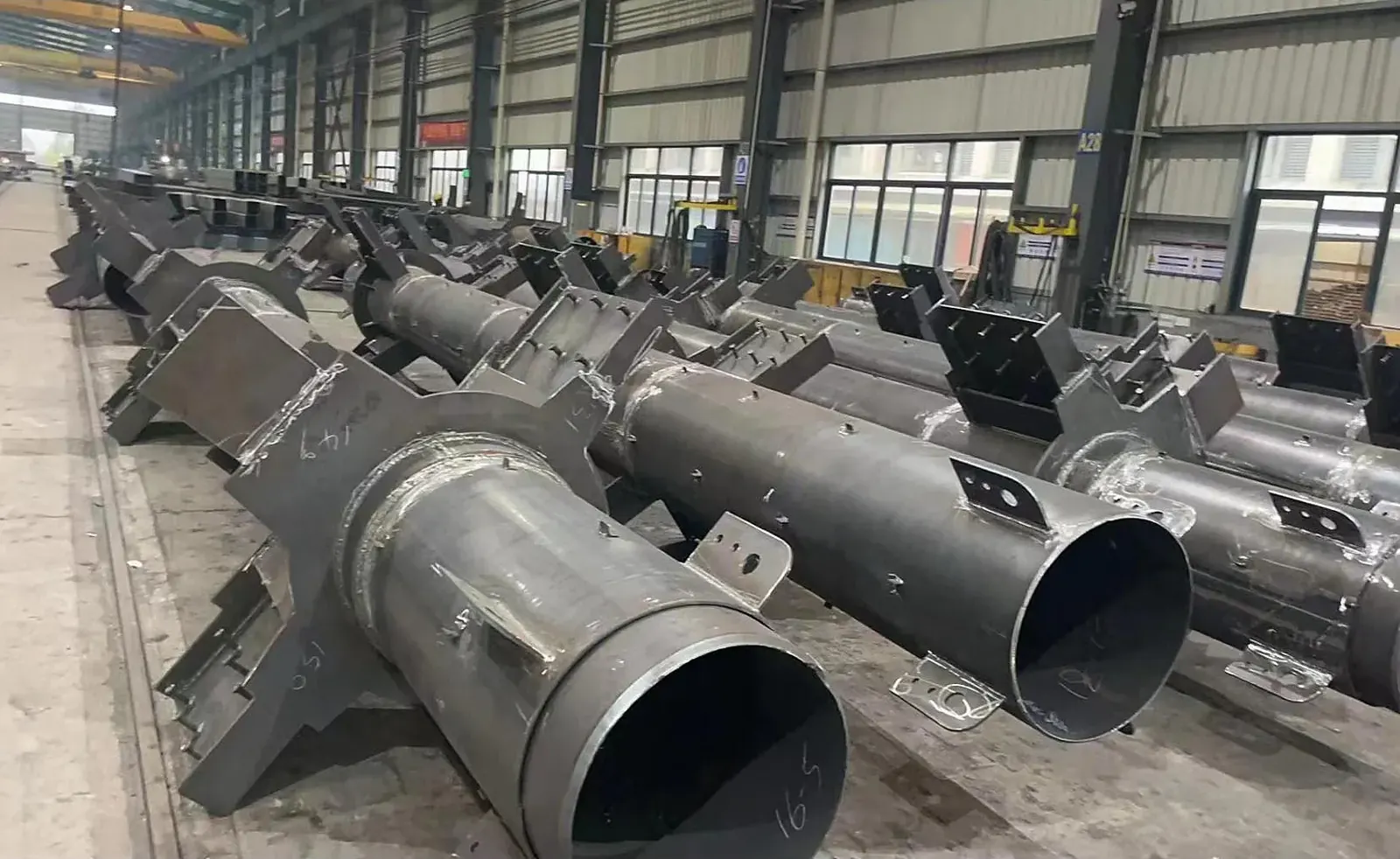
Rolled tube columns before coating
02Section types
Four box and tube variants
Select a variant to see how it is made and where it is used.
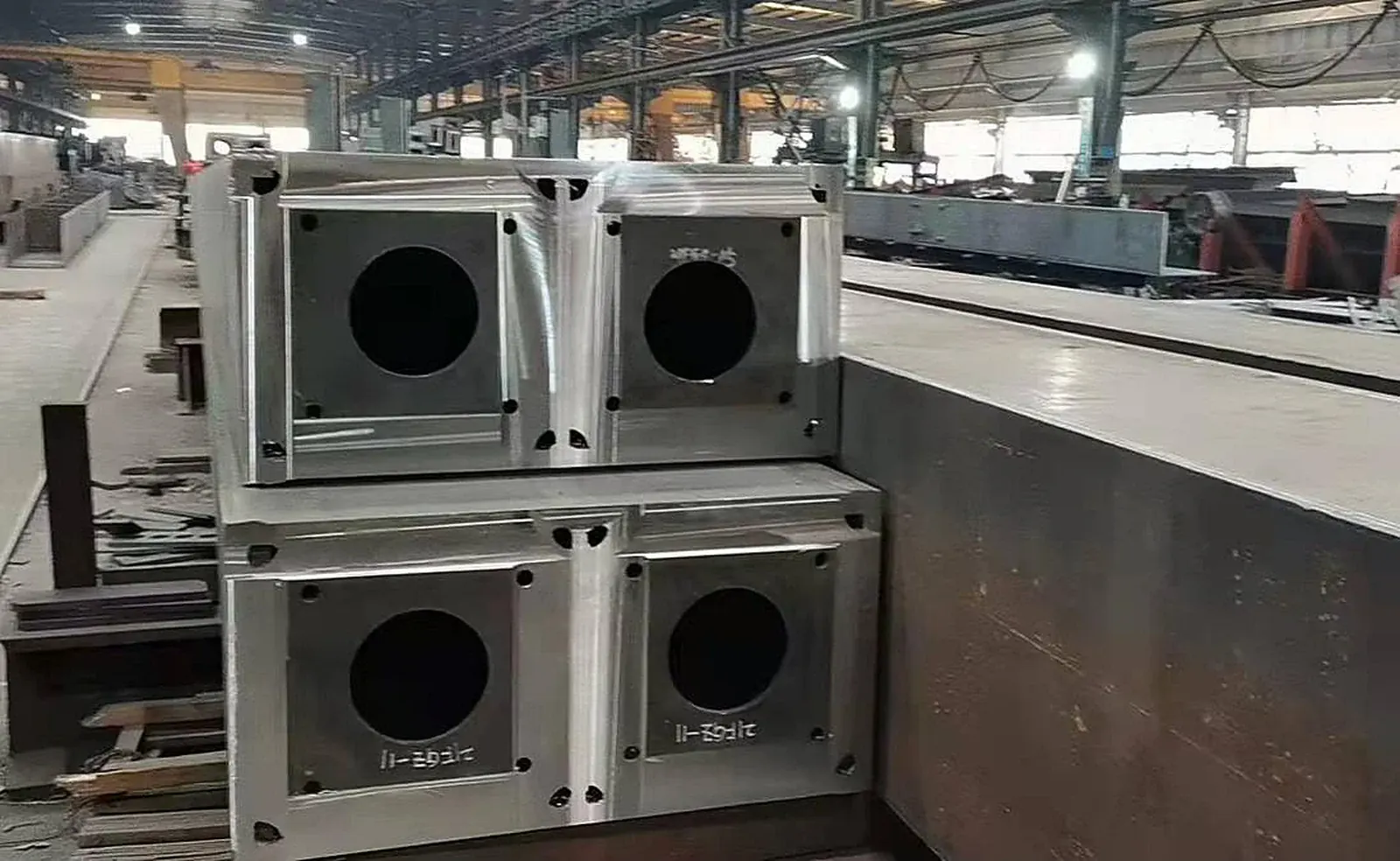
Four-plate box columns, 300 to 1,800 mm
Four plates are bevelled, tack-assembled on a fixture and welded with twin-wire SAW at the corners. Internal diaphragms at beam levels are welded to the skin plates with electroslag welding (ESW), which reaches joints a welder cannot. Corner welds are full or partial penetration as the engineer specifies.
- Square or rectangular, constant or stepped
- Plate 12–100 mm
- Concrete-filled (CFT) versions with filling and vent holes
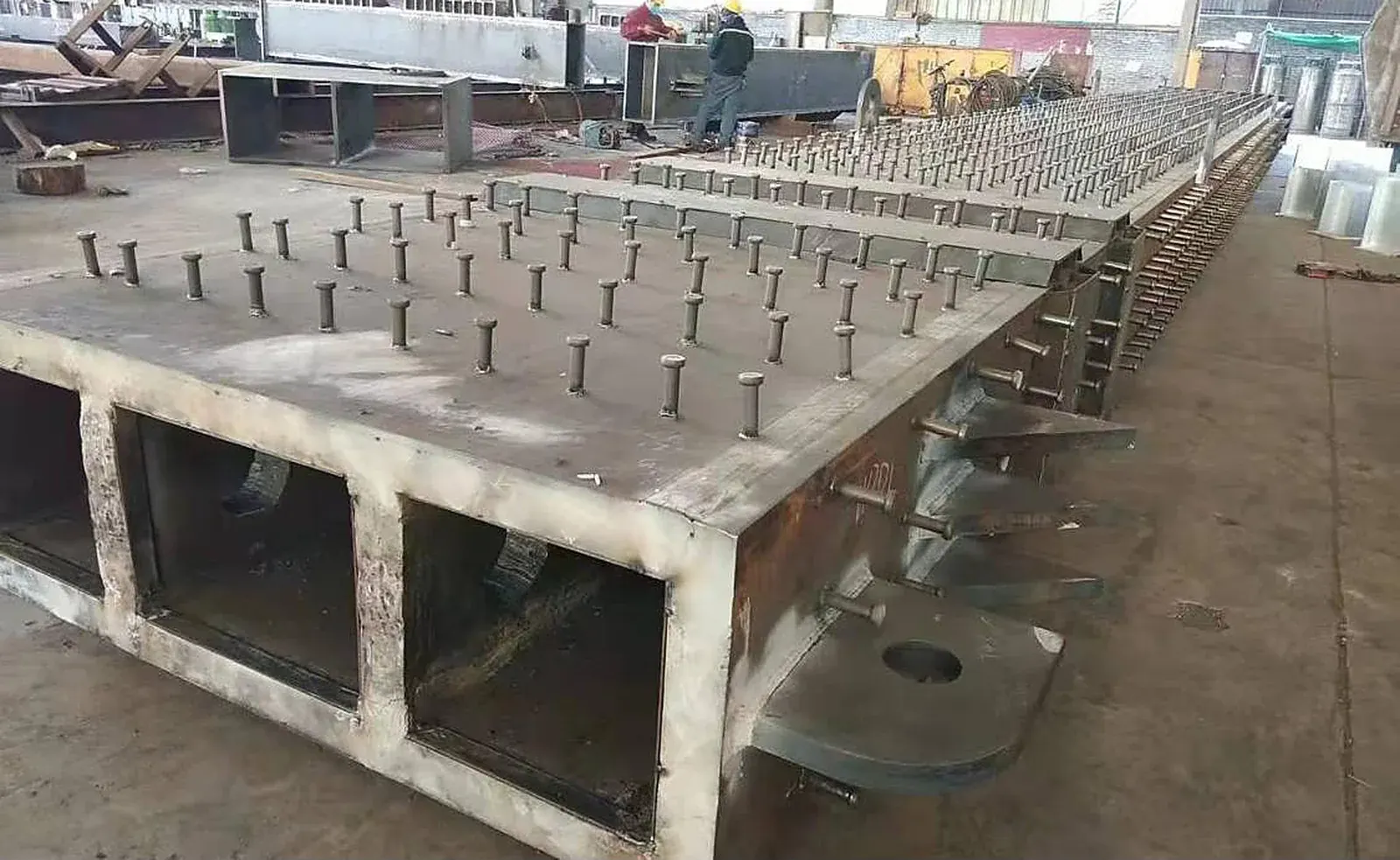
Closed sections for torsion and long spans
Box beams carry torsion and biaxial bending far better than open H-sections. We make transfer girders, exposed architectural beams and bridge box girders with longitudinal stiffeners and shear studs for composite decks.
- Spans up to 24 m per piece, longer with site splices
- Shear studs welded in the shop
- Pre-camber cut into the web plates
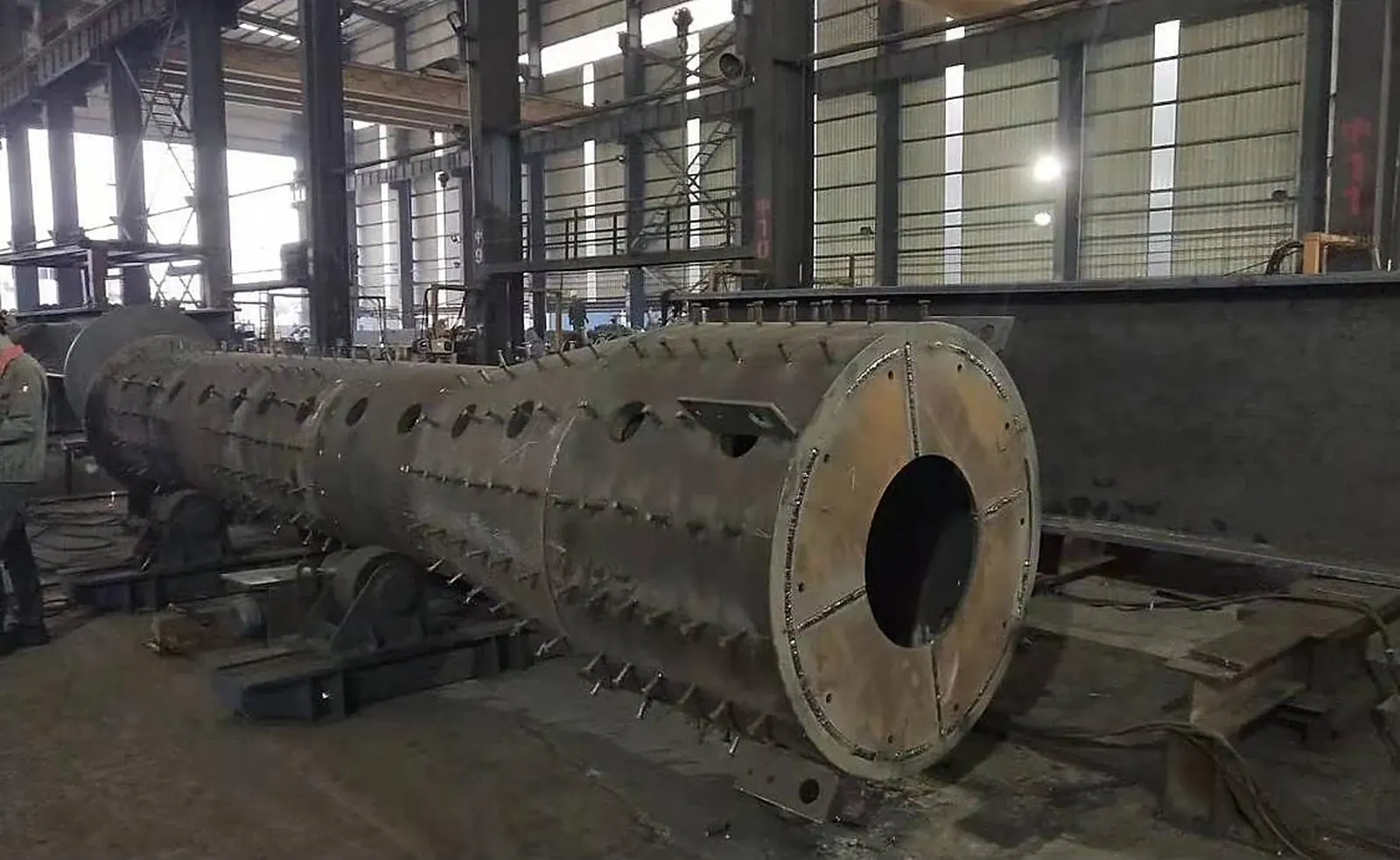
Circular columns Φ400–3,000 mm
Plate is pre-bent, rolled and seam-welded, then joined circumferentially to length. Tube columns suit high axial loads, exposed columns and concrete-filled steel tube (CFST) frames. Ovality and straightness are measured on every can.
- Wall 8–80 mm
- Longitudinal and circumferential seams 100% UT
- Through-diaphragm or outer-ring beam connections
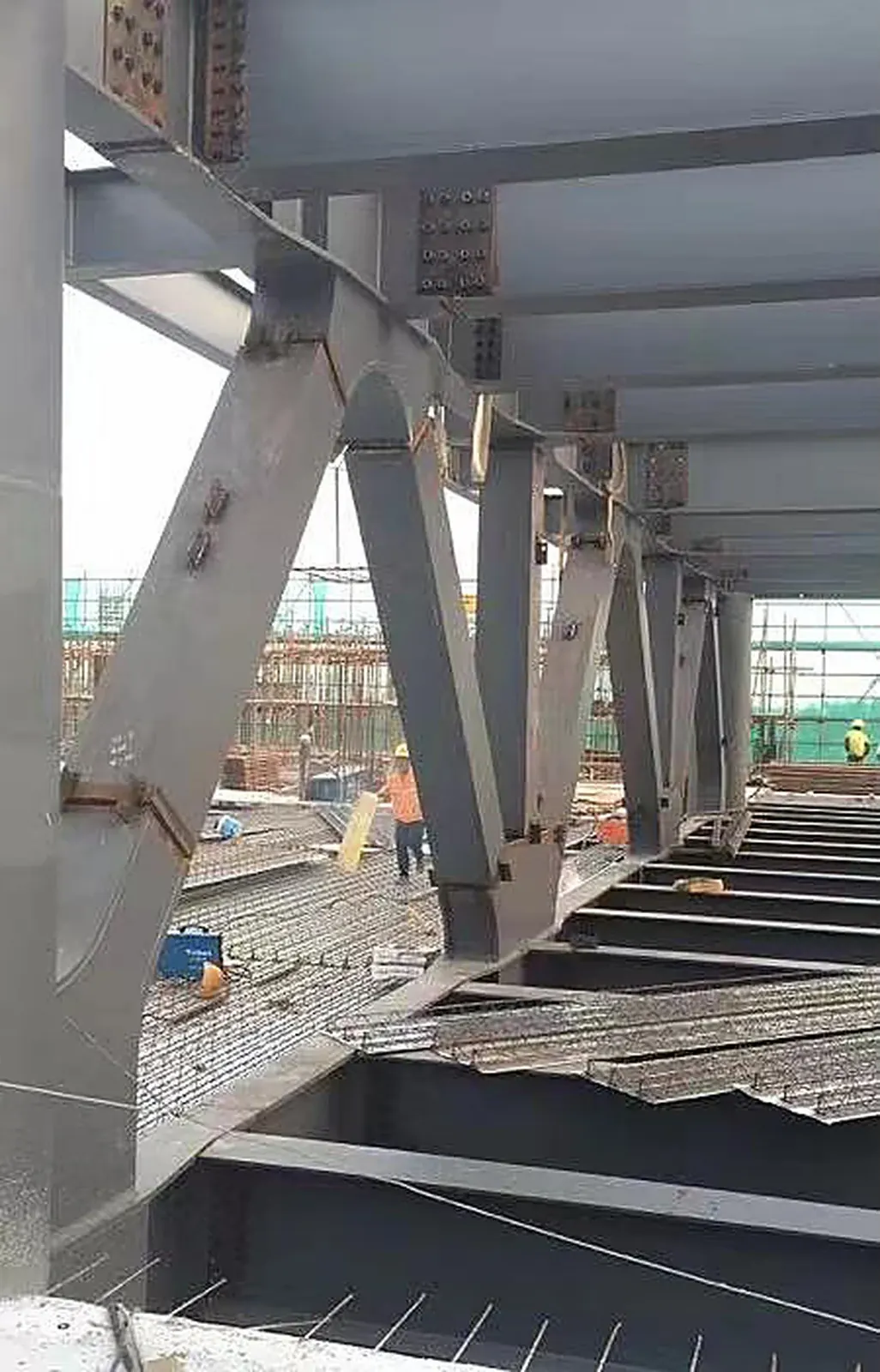
Changing section for form and load
Tapered tube columns and inclined box columns follow the architecture while keeping the load path. Plate is unfolded from the 3D model, CNC cut and rolled in segments, then trial-fitted.
- Conical tubes with constant or variable taper
- Inclined columns with surveyed work points
- Segment joints set at transport length
03Dimensional & processing limits
Box and tube member limits
Typical values for welded box and tube members. Tighter tolerances are available on request.
| Item | Limit | Note |
|---|---|---|
| Box column / beam section | 300 × 300 to 1,800 × 1,800 mm | Rectangular sections any aspect ratio within range |
| Plate thickness | 12–100 mm | Q355GJ / Q420GJC above 40 mm with Z-direction testing |
| Tube column diameter | Φ400–3,000 mm | Wall 8–80 mm; D/t checked against rolling limits |
| Single piece length | ≤ 24 m | 11.8 m for 40HQ containers |
| Single piece weight | ≤ 60 t | Heavier columns split at splices |
| Length tolerance | ±3 mm | Per GB 50205 / AWS D1.1, tighter on request |
| Section dimension tolerance | ±2 mm | Squareness of cross-section within 3 mm |
| Straightness | L/1,500, max 5 mm | Measured on the assembly bed |
| Diaphragm welding | ESW, 100% UT | Access holes avoided by ESW from outside the box |
Tolerances per GB 50205, AWS D1.1 or EN 1090-2 as specified on the drawings.
Plant limits that apply
| Item | Capability |
|---|---|
| Welded box columns & beams | 300 × 300 to 1,800 × 1,800 mm; plate 12–100 mm (multi-cavity mega columns in segments beyond 3,000 mm) |
| Rolled tube columns | Φ400–3,000 mm; wall 8–80 mm; tapered tubes available |
| Steel grades | Q235B–Q460, Q355GJ, Q420GJC; ASTM A36 / A572 Gr.50 / A992; EN S235–S355J2 / NH |
| Welding processes | SAW, GMAW (CO₂), electroslag (ESW), robotic welding |
| Inspection | 100% UT on all full-penetration welds; MT/PT per AWS D1.1 / GB 50205; EN 10204 3.1 MTC |
| Lead time | 25–40 days (standard members) / 40–60 days (complex members) after shop drawing approval |
Typical values. Final limits are confirmed per project in our quotation.
Full plant limits for every member family are in the capability table.
04Materials & welding
Thick plate grades and qualified welding
Most box columns are specified in Q355B (S355JR / A572 Gr.50). Columns for high-rise frames with plate over 40 mm use Q355GJ or Q420GJC, which are produced for building structures with a low yield-to-tensile ratio and Z15–Z35 through-thickness ductility. Plate is ultrasonically checked for laminations before cutting.
Welding is qualified per WPS/PQR to AWS D1.1 or ISO 15614. Thick-plate joints are preheated, the interpass temperature is logged, and heavy corner welds are post-heated to drive off hydrogen.
| Joint | Process | Test |
|---|---|---|
| Corner seams | Twin-wire SAW | UT 100% (CJP zones) |
| Internal diaphragms | ESW | UT 100% |
| Tube long / circ seams | SAW | UT 100% |
| Beam brackets, stiffeners | GMAW (CO₂) | UT / MT |
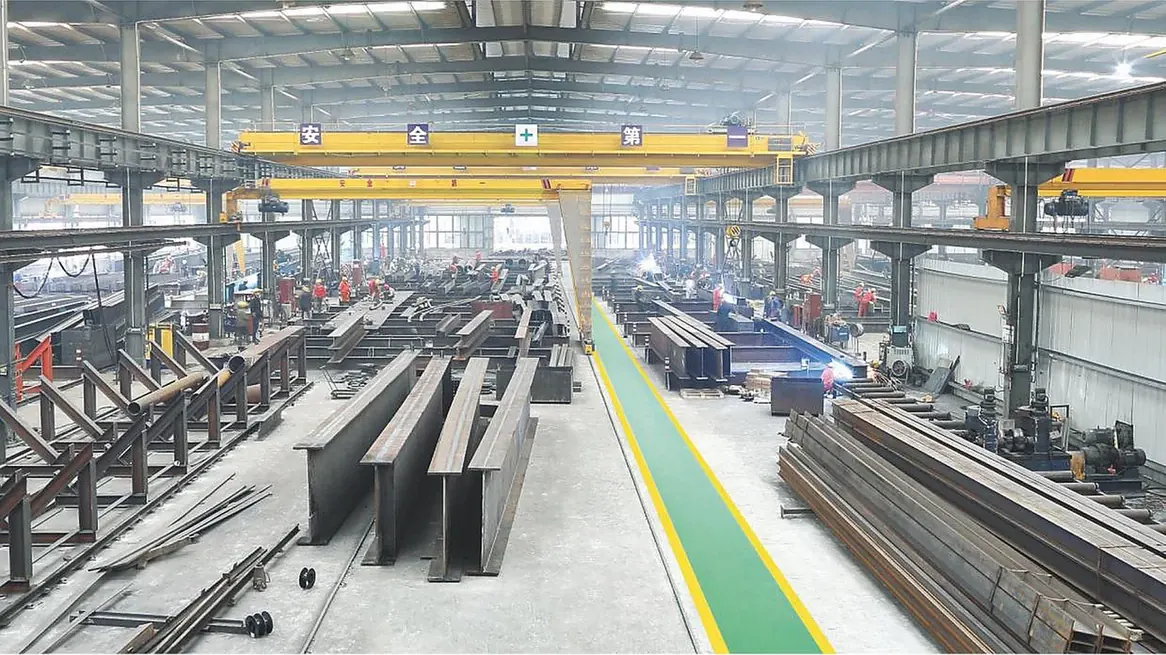
Box column assembly and SAW welding line
05Quality control
Checks on every column
Inspection records are filed per piece mark and issued with the shipping documents.
Plate UT before cutting
Lamination scan on thick plate so defects are found before welding, not after.
100% UT on CJP welds
Every full-penetration corner and diaphragm weld is tested and recorded against the piece mark.
Dimensional report
Length, section, twist and bracket positions measured and signed per column.
Traceable documents
Heat numbers transferred to each piece. MTC to EN 10204 3.1 shipped with the steel.
Related services
Tekla model, connection design, shop drawings, NC files and a weight-accurate BOM.
Sa2.5 blasting, epoxy zinc-rich systems, hot-dip galvanizing and intumescent coating.
100% UT on CJP welds, dimensional reports, MTC 3.1, packing and port logistics.
06Applications
Where this member family is used
Building systems where this member family does most of the work.
Mega columns, CFT columns and transfer girders for towers and complexes.
07Reference project
CGN Headquarters, Shenzhen
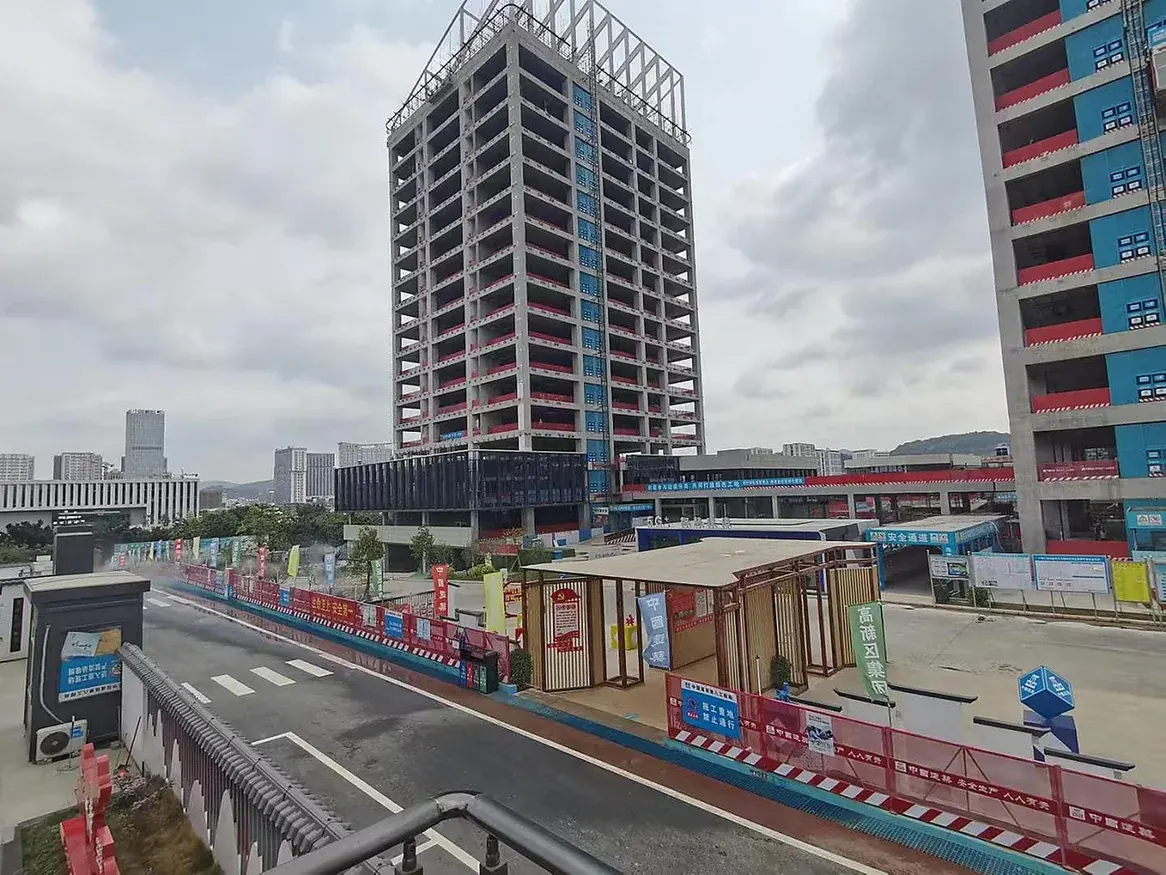
For the CGN Headquarters we fabricated 18,472 t of structural steel, including heavy box columns and multi-cavity mega columns for the tower frame. Columns were split at floor-level splices, each segment trial-fitted and surveyed before dispatch.
The same thick-plate procedures were used on the Zengcheng New World tower, a 241 m super high-rise built with about 7,000 t of Q420GJC plate.
Related members
08FAQ
Box column questions
Send your drawings and our engineers reply within 24 hours.
How are internal diaphragms welded inside a closed box?
By electroslag welding (ESW) from outside the box after the fourth plate is closed. It gives a full-penetration joint without access holes, and every ESW joint is tested by UT.
What is the largest box column you can make?
Sections up to 1,800 × 1,800 mm in plate up to 100 mm, single pieces up to 24 m and 60 t. Larger multi-cavity mega columns are made in segments; see our complex nodes page.
Box column or H-column: which is more economical?
H-columns are cheaper per tonne and faster to fabricate. Box columns win when loads act in both directions, when torsion matters or when the column is exposed. Our guide H-beam vs I-beam vs box column compares them.
Do you supply concrete-filled steel tube columns?
Yes. We fabricate the steel shell with filling holes, vent holes, studs and diaphragms; concrete is placed on site by the main contractor.
Which grade do you use for thick plate?
Above 40 mm we recommend Q355GJ or Q420GJC with Z-direction testing to resist lamellar tearing. Equivalent EN or ASTM grades can be supplied if specified.
How long does fabrication take?
Standard box and tube columns take 25–40 days after shop drawing approval. Columns with many diaphragms or tapered segments take 40–60 days.
Send your drawings. Get a 24-hour BOM and FOB price.
DWG, IFC, Tekla or PDF. Engineering review by our Tekla team, from 50 t or 2,000 m².